
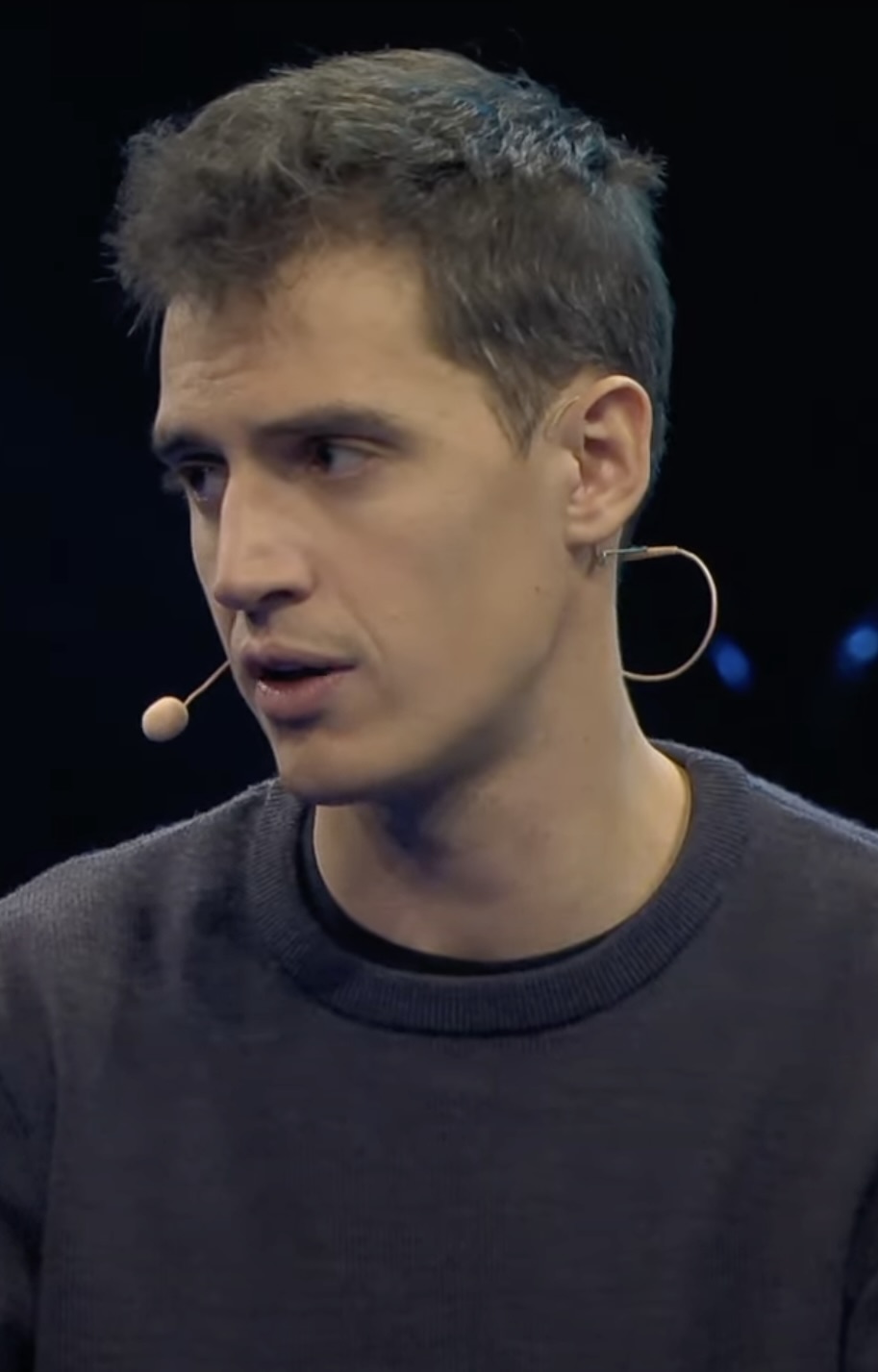
FigureAsia 35 Under 35 · AI
Arthur Mensch
Age 33 · Researcher-founder · France and the European Union; models and infrastructure distributed internationally
Building Europe’s Independent Frontier Artificial Intelligence Stack
- Age at the edition eligibility date
- 33
- Field
- Frontier models, open weights and sovereign AI infrastructure
- Country or region
- France and the European Union; models and infrastructure distributed internationally
- FigureAsia U35 Assessment
- 91.3 / 100
Profile
Career and documented record
Arthur Mensch has positioned Mistral AI as both a frontier-model laboratory and a strategic European infrastructure company. Its 2025 expansion into reasoning models, coding, deployment tooling and sovereign compute reflects an effort to keep advanced AI technically competitive, commercially usable and institutionally independent.
Arthur Mensch trained in mathematics and machine learning before working as a researcher on large language models. In 2023, he co-founded Mistral AI with Timothée Lacroix and Guillaume Lample, becoming chief executive. The company’s early identity combined efficient model design with open-weight releases and deployment flexibility. That distinction requires precision. Some models release downloadable weights under permissive terms; others use different commercial licences. “Open-weight” is therefore more accurate than describing every system as fully open-source. The broader strategy is to give enterprises and governments more control over where and how models run. In June 2025, the company released Magistral, a family of reasoning models with an open version and an enterprise version. It also expanded into coding tools, model-customisation infrastructure and Mistral Compute, a European AI-compute platform developed to support sovereign deployments. In September, it raised €1.7 billion at an €11.7 billion post-money valuation. Mensch’s contribution lies in treating models, tooling and compute as one strategic stack. Technical claims remain team achievements and company evaluations, but the laboratory’s continued independence has given European organisations a serious alternative in a field otherwise dominated by a small number of United States and Chinese laboratories.
FigureAsia selection
Why Arthur Mensch is on the list
FigureAsia selected Mensch for building an institution that broadens the geography of frontier AI. The company’s significance is not that it mirrors larger laboratories, but that it has made efficiency, controllable deployment and European infrastructure central competitive propositions. Its financing and product expansion indicate that this position has moved beyond symbolic independence. FigureAsia attributes models to the researchers and engineers who built them, while recognising Mensch’s role in setting the integrated strategy and keeping a capital-intensive laboratory commercially and institutionally viable.
Verified work
The 2025–26 record
Verified contribution 01
In June 2025, the company released Magistral, offering both an open reasoning model and a larger enterprise version.
Verified contribution 02
During 2025, it expanded its developer and enterprise stack through coding and model-customisation products.
Verified contribution 03
In June 2025, it announced Mistral Compute, extending its strategy into European AI infrastructure.
Verified contribution 04
In September 2025, it raised €1.7 billion at an €11.7 billion post-money valuation.
Field context
The work in its field
The company distributes models, APIs and enterprise systems internationally, with deployment options spanning cloud, private infrastructure and downloadable weights. Customer and regional revenue totals remain private, limiting independent measurement of adoption by geography.
Its approach offers Asian governments and enterprises another reference model for balancing frontier capability, local deployment, data control and dependence on foreign infrastructure providers.
FigureAsia U35 Assessment
Assessment breakdown
91.3out of 100
Defining contribution
23.3 / 25
A completed piece of work, institution or system that materially changes what the field can do.
Demonstrated impact and reach
18.2 / 20
Observable adoption, scientific use, policy consequence or operational reach, with self-reported metrics labelled as such.
Personal agency and attribution
13.8 / 15
Evidence that the individual shaped the result, separated from team, employer and investor halo.
Technical or institutional originality
13.8 / 15
A new method, product form, research direction, governance mechanism or deployment model.
Durability and field-shaping influence
9.2 / 10
The likelihood that the contribution will remain useful beyond a single news cycle or model release.
Evidence integrity and responsible practice
8.5 / 10
The quality of the record, the precision of claims and the seriousness with which limitations and harms are addressed.
Asia–world relevance
4.5 / 5
A documented connection to Asia, impact on Asian systems, or clear importance to the region’s place in the international field.