
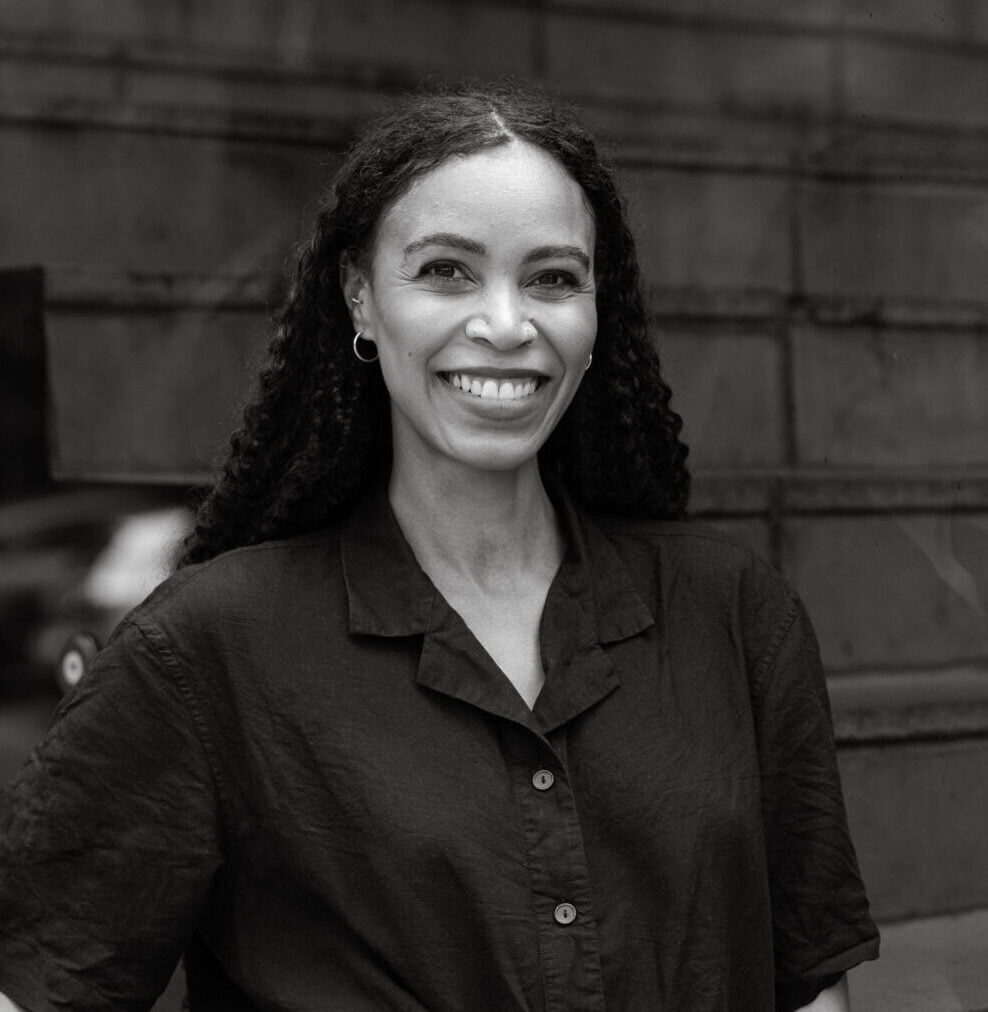
FigureAsia 35 Under 35 · AI
Pelonomi Moiloa
Age 33 · Technical founder and data-governance innovator · South Africa and Japan; community-governed language technology with international research participation
Building Language Artificial Intelligence That Returns Power to Its Speakers
- Age at the edition eligibility date
- 33
- Field
- Resource-efficient language AI and community data governance
- Country or region
- South Africa and Japan; community-governed language technology with international research participation
- FigureAsia U35 Assessment
- 91.3 / 100
Profile
Career and documented record
Pelonomi Moiloa is building language AI from a premise the industry has too often ignored: people should not surrender ownership of their languages to gain access to modern technology. Her work pairs efficient models with a practical economy of community rights.
For Pelonomi Moiloa, language is not merely training material; it is memory, commerce and the right to participate in public life. As co-founder and chief executive of Lelapa AI, she has built that conviction into systems designed for African languages and constrained computing environments. In 2025 she co-authored the peer-reviewed Esethu Framework, which couples community-led dataset curation with a commercial licence that waives fees for African entities and requires proceeds from non-African commercial use to be reinvested in further language data and fairly paid local work. Its proof of concept, the Vuk’uzenzele isiXhosa Speech Dataset, provides a research-accessible corpus for speech recognition while keeping stewardship close to its creators. The company also opened InkubaLM to an international compression challenge: more than 490 data scientists from 61 countries participated, and the strongest submissions reduced model size by as much as 75% while preserving performance. An affiliated 2025 convening report recorded the company’s claim that its isiZulu transcription and translation system used roughly 70% less data than comparable models and still outperformed available alternatives. Moiloa’s achievement is architectural and civic at once: she is showing that resource efficiency and community agency can be sources of technical advantage, not concessions at the edge of global AI.
FigureAsia selection
Why Pelonomi Moiloa is on the list
FigureAsia selected Moiloa because she has linked three problems usually treated separately: linguistic exclusion, compute scarcity and the extraction of community data. Her 2025–2026 record contains a peer-reviewed framework, a released speech dataset, an international model-compression programme and reported deployment performance. The work is technically credible, institution-building and globally instructive: it asks not simply whether a model can speak a language, but who controls the data, who benefits from commercial use and whether the system can run in the environments it claims to serve.
Verified work
The 2025–26 record
Verified contribution 01
In July 2025, co-authored the peer-reviewed paper introducing the Esethu Framework and the Vuk’uzenzele isiXhosa Speech Dataset. The framework waives commercial fees for African entities and directs other commercial licensing proceeds into further language-data creation and paid speaker participation.
Verified contribution 02
On 4 June 2025, led the company as it completed an international InkubaLM compression challenge involving more than 490 participants from 61 countries. The strongest submission reduced model size by 75% while preserving reported multilingual performance; the company described InkubaLM as a foundation rather than production-ready software.
Verified contribution 03
During 2025, presented resource-efficient language systems in an international portfolio convening. Its subsequent report recorded an isiZulu transcription and translation system using roughly 70% less data than comparable models while exceeding available alternatives on accuracy.
Verified contribution 04
On 23 June 2026, authored a global strategy argument setting out why emerging economies need country-specific AI blueprints responsive to their energy grids, languages, infrastructure and economic constraints.
Field context
The work in its field
Her models and governance ideas address more than one region. The compression challenge drew participants from 61 countries, while Esethu offers a replicable licensing architecture for low-resource and Indigenous-language communities well beyond Africa.
Moiloa completed postgraduate engineering work in Japan; more importantly, her efficient-model and community-data approach speaks directly to Asia’s many low-resource languages and uneven compute environments.
FigureAsia U35 Assessment
Assessment breakdown
91.3out of 100
Defining contribution
22.75 / 25
A completed piece of work, institution or system that materially changes what the field can do.
Demonstrated impact and reach
17.4 / 20
Observable adoption, scientific use, policy consequence or operational reach, with self-reported metrics labelled as such.
Personal agency and attribution
13.8 / 15
Evidence that the individual shaped the result, separated from team, employer and investor halo.
Technical or institutional originality
14.25 / 15
A new method, product form, research direction, governance mechanism or deployment model.
Durability and field-shaping influence
9.2 / 10
The likelihood that the contribution will remain useful beyond a single news cycle or model release.
Evidence integrity and responsible practice
9 / 10
The quality of the record, the precision of claims and the seriousness with which limitations and harms are addressed.
Asia–world relevance
4.9 / 5
A documented connection to Asia, impact on Asian systems, or clear importance to the region’s place in the international field.